
PAINT CORRECTION DUBLIN
Machine polishing that safely reduces swirl marks, light scratches, haze and oxidation — restoring gloss, clarity and depth.
Book Your Paint Correction
Tell us about your car and what you would like to improve. Kriss will recommend the right level of correction, confirm the price and offer the next available dates — the paintwork inspection is free and there is no obligation.
ArtDeShine Authorised Centre · 265+ Google Reviews · Dublin
By sending this form you agree that Auto Detail Valeting may contact you about your enquiry. No spam, no newsletters.
PAINT CORRECTION REVIEWS
EXCELLENT Based on 265 reviews
 Posted on Google

 Laura KellyGreat job cleaning my car had a lovely capachino in cafe tooPosted on Google
 Lucio TudiscoChris and his team are extremely professional. Their attention to details is unmatched. I could not be happier with the care they took with my car.Posted on Google
 Michael WalshExcellent job and good value!Posted on Google
 LucasLeft my car in with these guys and they did a mega mega job. They were all very friendly and knowledgeable. I have another car going into them soon and will definitely come back. Thanks guys super jobPosted on Google
 Fintan PowerTop Class Service provided by Kris and his team, recommended 100% 👍Posted on Google
 Evan PurcellThank you for the outstanding service and professionalism. These guys are the best in the business. They left my white A4 immaculate.
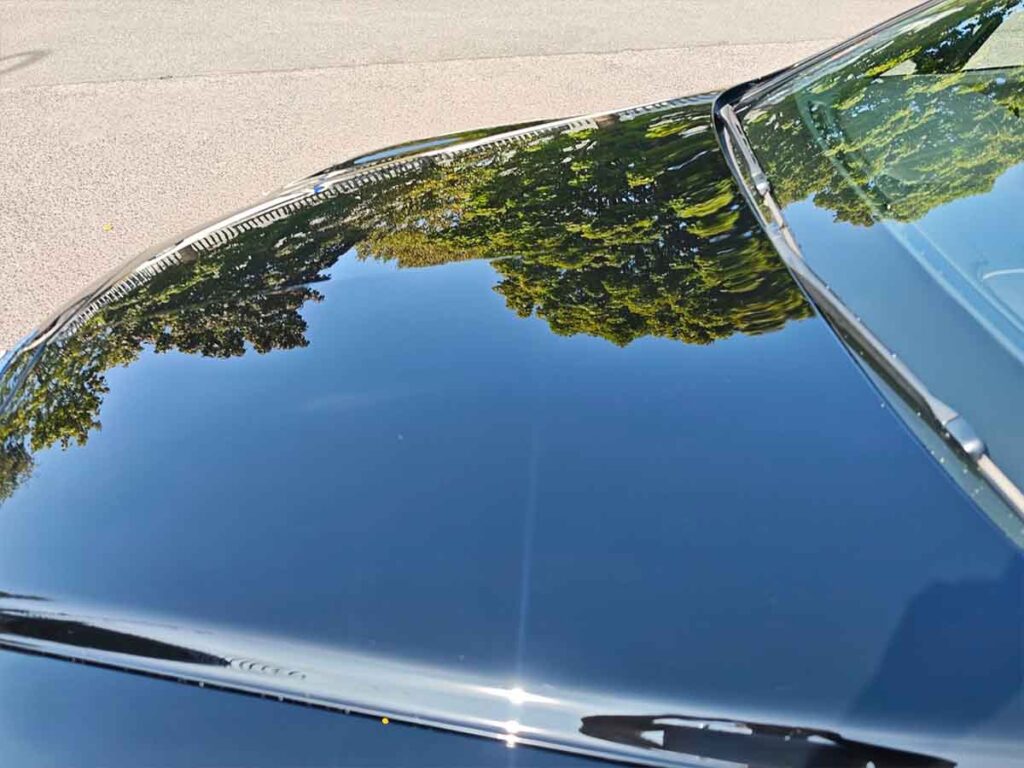
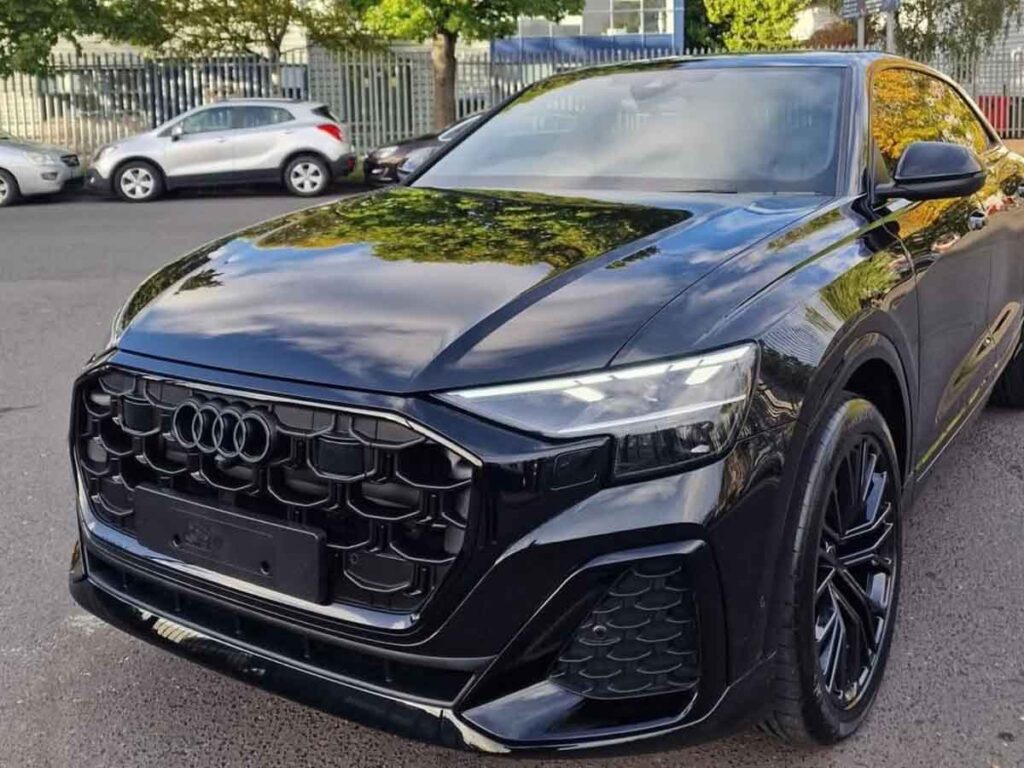
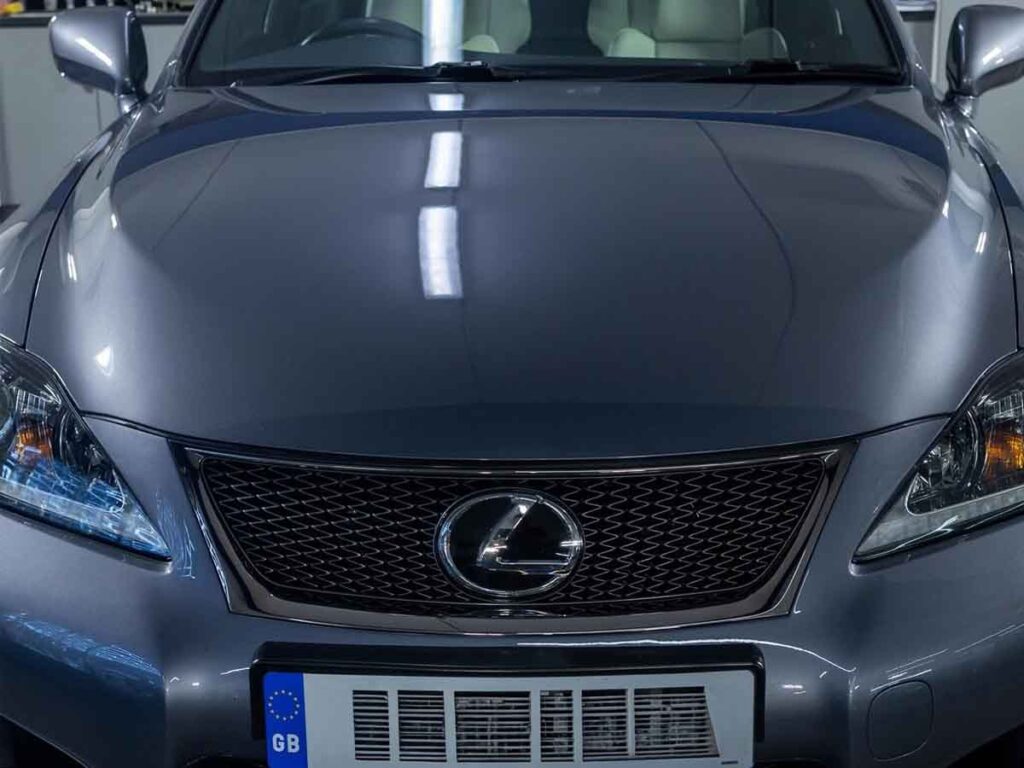
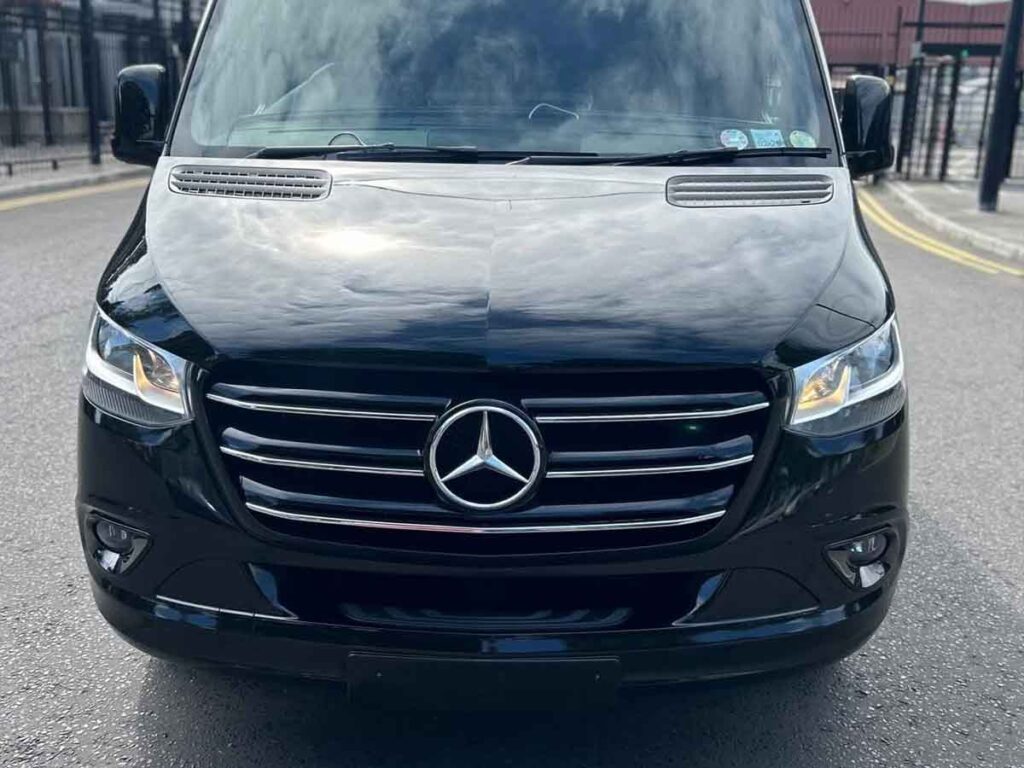
Paint correction in Dublin · a complete guide
Paint correction explained: what it is, what it costs and what it can really fix
Paint correction is the most misunderstood service in car detailing. Some companies use the name for a quick machine polish with a glossy filler; others use it for days of careful work under inspection lights. This guide explains how professional paintwork correction actually works, how much paint it removes, how we price it in Dublin and how to tell whether your car needs a one-stage, two-stage or multi-stage correction – before you spend any money.
- What it is
- Machine polishing that levels the clear coat to remove or reduce swirl marks, holograms, light scratches, haze and oxidation. The defects are removed – not hidden.
- Cost in Dublin
- Depends on the size of the car, the paint condition and the level of correction. You get one fixed price after a free paintwork inspection – before any work begins.
- How long it takes
- Typically one full day for a one-stage enhancement, two days for a two-stage correction and three days or more for a multi-stage correction.
- What it cannot fix
- Stone chips, scratches that go through the clear coat, dents and peeling lacquer. We will tell you this at the inspection, not after the work.
- Who does the work
- Kriss and the ADV team in our Dublin 24 studio – an ArtDeShine Authorised Centre with 265+ Google reviews.
- What is paint correction?
- Defects we correct – and what we can’t
- How much paint is removed?
- One-stage, two-stage or multi-stage?
- Our paint correction process
- Paint correction cost in Dublin
- How long does it take?
- Black, white, red and new cars
- Paint correction and ceramic coating
- Aftercare
- Paint correction FAQ
The basics
What is paint correction?
Paint correction – also called paintwork correction, machine polishing or, by some people, car colour correction – is the controlled removal of a very thin layer of clear coat to level out the defects that sit in it.
Almost every modern car has three layers of paint: a primer, a base coat that carries the colour and a clear coat on top that gives gloss and UV protection. Swirl marks and light scratches live in that top clear layer. Under the sun or a garage light, each tiny scratch catches the light at a different angle, and together they make the paint look grey, cloudy or “spider-webbed” instead of deep and clear.
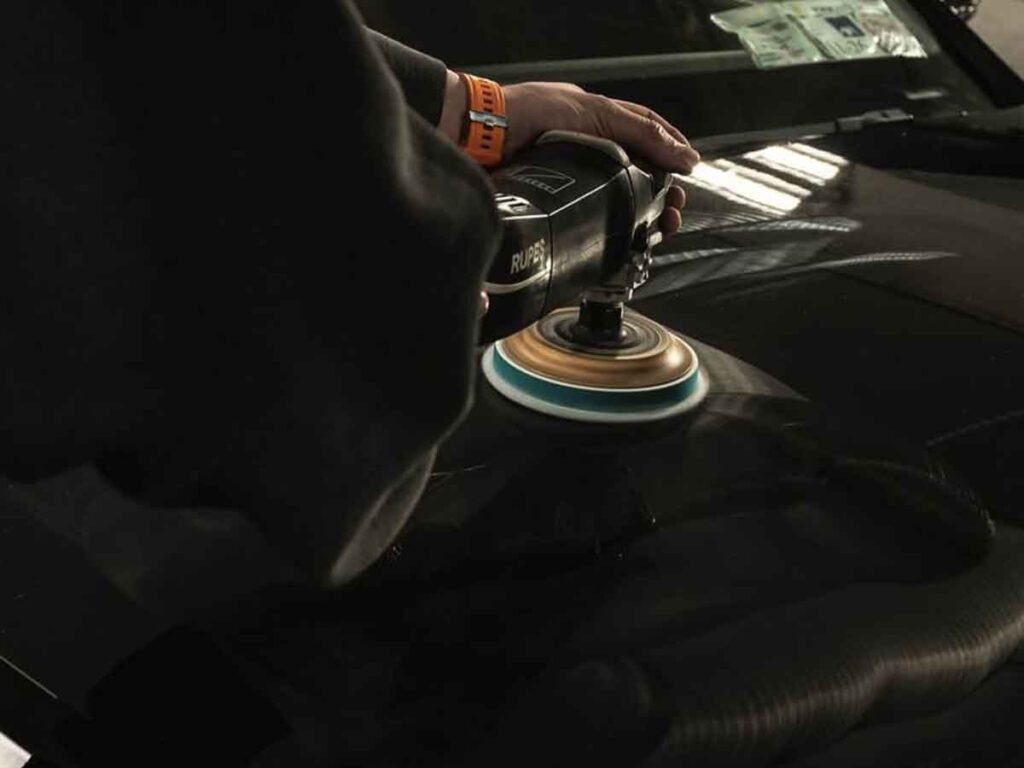
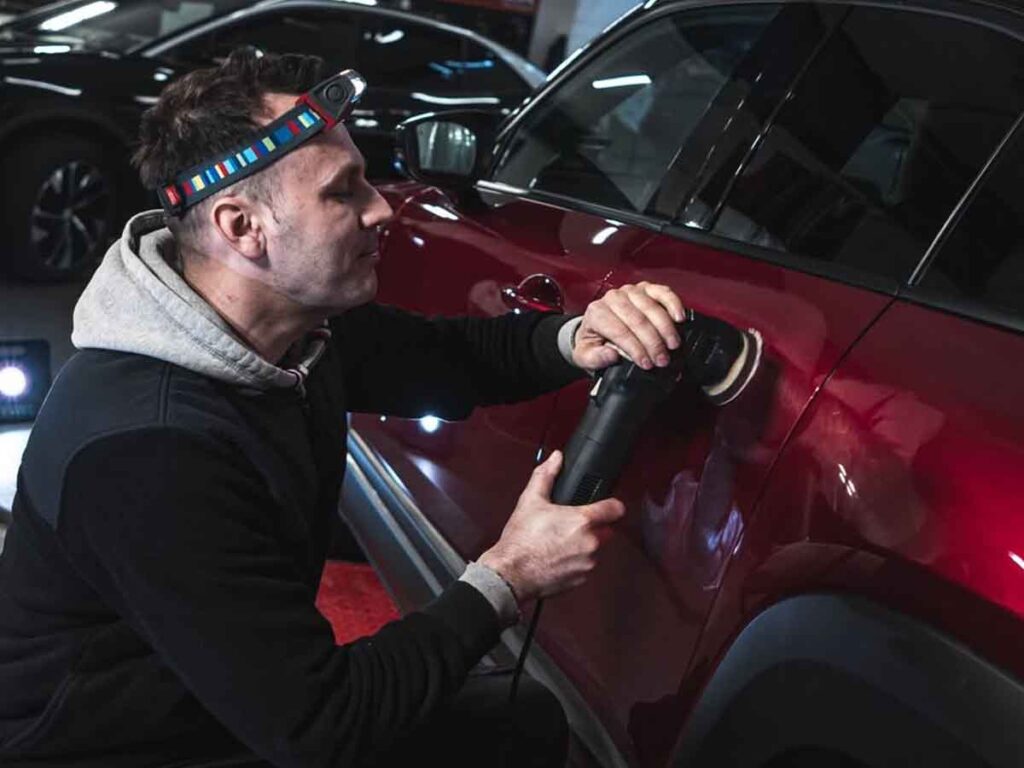
During correction we use a dual-action or rotary machine polisher, a cutting compound and a pad matched to your paint. The compound abrades the clear coat microscopically until the surface around each scratch is level with the bottom of the scratch. When the surface is flat again, light reflects evenly – and the colour looks the way it did when it left the factory, often better.
What paint correction is not
It is not a wax or a glaze. Many “polish and wax” services and most supermarket or Halfords-type products contain oils and fillers. They fill the scratches and look great for a few washes, then the swirls come back. True correction removes the defect, so the result stays until new damage is created.
It is not a respray. No paint is added. We work with the clear coat already on the car, which is why the original factory finish – and the car’s value – is preserved.
It is not unlimited. Clear coat is thin and does not grow back. A good detailer removes as little as possible to reach the agreed result. That principle shapes everything we do.
What we can improve
Paint defects that paint correction removes
These are the problems we see every week on cars in Dublin – most of them caused by automatic car washes, dirty sponges, drying towels and our wet, gritty Irish roads.
Swirl marks
Fine circular scratches from washing and drying. The single most common reason people book paint correction, and especially visible on dark cars.
Holograms & buffer trails
Shimmering marks left by an incorrect machine polish, often from a quick dealer or body shop “valet”. We refine them out with the correct pad and polish.
Light scratches
Fingernail marks behind door handles, light key marks and bramble scratches that are still within the clear coat can usually be removed or greatly reduced.
Oxidation & faded paint
Chalky, flat paint – common on older red, blue and single-stage paint – can often have its colour and clarity restored.
Bird dropping etching & water spots
Acidic droppings and mineral spots etch into the clear coat. Light etching polishes out; deeper marks can be reduced.
Wash marring & haze
Dull, greyish paint covered in random fine marks from towels, sponges and brush washes. Correction restores a clear, crisp reflection.
What polishing cannot fix: stone chips, rock chips, scratches you can feel that go through to the colour or primer, dents, missing paint and peeling clear coat. These need a touch-up, smart repair or body shop. We point them out during the inspection so you know exactly what result to expect – we would rather lose a job than promise something paint correction cannot deliver.
The science behind a safe correction
How much paint does paint correction remove?
Factory clear coat is typically only around 30–50 microns thick – thinner than a sheet of paper. A careful one-stage polish removes a tiny fraction of that; a heavy multi-stage correction removes more. That is why the real skill in paint correction is not making paint shine, it is knowing when to stop.
Where the condition of the paint calls for it, we take paint-depth readings with a paint thickness gauge before correcting. The readings tell us:
- how much clear coat is available on each panel
- whether a panel has been resprayed (resprays are often thinner or softer)
- where edges and body lines need extra care
- which level of correction is safe for your car
Hard paint, soft paint
Not all clear coats behave the same. Some manufacturers use very hard, scratch-resistant clear coats that need more aggressive compounds and more time. Others, including many Japanese brands and Tesla, use softer paint that corrects quickly but scratches easily and can haze if the wrong pad is used.
This is why we always start with a test spot. We correct a small section with the least aggressive combination of pad and compound, check it under inspection lights and only step up if the result is not good enough. The combination that works on the test spot is then used on the whole car, panel by panel.
The result: maximum defect removal with the minimum clear coat removed – so your paint can still be safely polished again in the future.
Tailored to your paintwork
One-stage, two-stage or multi-stage paint correction?
The “stage” or “step” is the number of separate polishing passes with different pads and compounds. More stages remove more defects – and take more time and more clear coat. The right level depends on the condition and thickness of your paint, not on the age or value of the car.
One-Stage Enhancement
Also called a single-stage polish, one-step paint correction or paint enhancement. One combined cutting-and-finishing pass.
- Typically removes 50–70% of light defects
- Big jump in gloss and clarity
- Ideal for newer cars and well-kept paint
- Perfect preparation before a coating
- Usually completed in one day
Two-Stage Correction
Also called a 2-step or stage 2 paint correction. A dedicated cutting stage followed by a refining stage.
- Typically removes 70–90% of defects
- For visible swirls, holograms and wash marring
- Refining stage restores a crisp, haze-free finish
- Recommended for most dark cars
- Usually two days
Multi-Stage Correction
Also called a 3-stage or full paint correction. Several cutting and refining stages for paint in poor condition.
- Maximum safe defect removal
- For neglected, heavily marred or show cars
- Paint-depth readings where required
- Test spots before full correction
- Usually three days or more
| One-stage | Two-stage | Multi-stage | |
|---|---|---|---|
| Best for | Light swirls, dull paint, new cars | Visible swirls, holograms, wash marring | Heavy defects, neglected or show cars |
| Typical defect removal | 50–70% | 70–90% | 90%+ where paint depth allows |
| Clear coat removed | Minimal | Low to moderate | Moderate – measured panel by panel |
| Typical time | 1 day | 2 days | 3+ days |
| Price | Fixed price confirmed after a free paintwork inspection | ||
Not sure which level you need? Book a free inspection. We look at the paint with you under detailing lights, show you the defects and explain what each level of correction would realistically achieve on your car.
Our method
Our paint correction process, step by step
Every car is corrected indoors in our Dublin 24 detailing studio – not on a driveway. Controlled lighting, temperature and a dust-free space are essential for a correction that looks right in the sun, not only in the shade.
Consultation & inspection
We look at the paint under detailing lights with you, mark the defects and agree what result you want.
Paint-depth readings
Where needed, panels are measured so we know how much clear coat we can safely work with and can spot resprays.
Safe wash
Snow foam pre-wash, two-bucket hand wash and careful drying – so we do not add new swirls before we remove the old ones.
Decontamination
Iron fallout remover, tar remover and a clay bar treatment leave the surface perfectly smooth and clean.
Masking & test spot
Trims, badges, rubbers and sharp edges are taped off. A test spot finds the least aggressive pad and compound that works.
Cutting stage
The car is corrected panel by panel, section by section, with readings re-checked on thin or repaired areas.
Refining & panel wipe
A finishing polish removes any haze. A panel wipe strips oils so we see the true result – no fillers hiding anything.
Protection & handover
Paint is protected with a sealant, wax or coating, then we walk you round the car and explain aftercare.
Honest pricing
How much does paint correction cost in Dublin?
Paint correction is priced on time and skill, so the price depends on the car in front of us. A one-stage enhancement is the most affordable option, a two-stage correction sits in the middle and a multi-stage correction is the biggest investment, because it takes the most hours. Your exact price is confirmed after a free paintwork inspection – before any work begins.
What affects the price
- Size of the car – a Range Rover or van has far more paint than a hatchback.
- Condition of the paint – heavy swirls and scratches need more stages and more hours.
- Paint hardness – hard clear coats (common on many German cars) take longer to cut.
- Colour – black and dark cars show every flaw and need a more thorough refining stage.
- Level of correction – one-stage, two-stage or multi-stage.
- Protection afterwards – sealant, wax or a ceramic or graphene coating.
Why we don’t quote a final price over the phone
Two cars of the same model and year can need completely different work. One may have soft paint with light swirls; the other a resprayed wing, thin edges and years of automatic car wash damage. A price given without seeing the paint is either too high – or it gets “adjusted” on the day. We prefer to inspect, measure and give you one honest price.
Why cheap paint correction is expensive
A very low price for “paint correction” usually means one quick pass with a filler-heavy polish. It looks good when you collect the car, then swirls return after a few washes. Worse, rushed machine work can leave holograms, burn through edges or remove more clear coat than needed – damage that only a respray can fix. Real correction takes hours of careful work, and the price reflects that.
What is included in every correction
Inspection, paint-depth readings where needed, safe wash, full decontamination, masking, test spot, correction to the agreed level, panel wipe inspection, paint protection and an aftercare handover.
Planning your booking
How long does paint correction take?
Plan for one full day for a one-stage enhancement, around two days for a two-stage correction and three days or more for a multi-stage correction. If you add a ceramic or graphene coating, allow extra time for it to cure indoors before the car goes back out on Irish roads.
We do not rush corrections to fit more cars into a day. If your car needs longer than planned – for example because of very hard paint or a respray discovered during readings – we tell you before we continue, not on the invoice.
Every paint is different
Paint correction for black, white, red and new cars
Black cars
Black paint shows every swirl, hologram and water spot. Black car paint correction needs a careful refining stage under strong lighting – this is where poor polishing is most obvious.
White & silver cars
Swirls are harder to see, but white paint often looks flat, yellowed or contaminated. Decontamination and correction restore a clean, bright, glossy finish.
Red paint
Red paint fades and oxidises faster than most colours. Correction removes the dull, pink-looking top layer and brings back deep, rich colour.
New cars
Brand-new cars often arrive with dealer swirls and holograms from pre-delivery washing. A one-stage enhancement before protection is the best start a new car can get.
Every manufacturer uses a different paint system. BMW, Audi and Mercedes-Benz clear coats tend to be hard and slow to correct; Tesla and many Japanese brands use softer paint that corrects quickly but marks easily. That is why the pad and compound are chosen on a test spot on your car, not from a standard recipe.
Choose the right service
Paint correction and ceramic coating: why the order matters
Paint correction restores. A coating protects. A ceramic or graphene coating bonds to the paint and locks in whatever is underneath – including swirls. That is why correction always comes first and protection second.
After correction, a coating makes the paint easier to wash, more resistant to contamination and helps preserve the corrected finish for years. If you want both, we plan them as one booking so the coating goes onto freshly corrected, perfectly clean paint.
Explore ceramic coatingBefore PPF (paint protection film)
Paint protection film is clear and shows everything beneath it. Any swirl or scratch left under the film is sealed in. Correcting the paint before PPF is installed is strongly recommended.
Professional correction vs DIY
All-in-one polishes from car shops can improve gloss, and they are fine for maintenance. But removing swirls safely needs a machine polisher, the right pads, inspection lighting, paint-depth readings and experience. Holograms and burnt edges from DIY or rushed polishing are among the most common problems we are asked to fix.
Keep the finish
How to look after your paint after correction
Correction removes the damage. How the car is washed afterwards decides how long the result lasts.
Avoid brush car washes
Automatic brush washes are the number one cause of swirl marks in Ireland. A single visit can undo part of the correction.
Wash the safe way
Pre-rinse or snow foam, two buckets with grit guards, a clean wash mitt and a soft drying towel. Never a dry cloth on a dirty car.
Maintain the protection
Top up sealant or wax as advised, or choose a coating for long-term protection. Remove bird droppings quickly before they etch.
Why Dublin drivers trust ADV
Who will be correcting your paint
Every paint correction at Auto Detail Valeting starts with Kriss looking at your car. He inspects the paint, recommends the level of correction and confirms the price – and the same team that quotes the job does the work.
- ArtDeShine Authorised Centre – trained and approved to apply professional coatings.
- 265+ Google reviews from Dublin customers.
- Independent advice – we don’t sell car care products, so we recommend only what your paint actually needs.
- Measured, not guessed – a test spot before every full correction and paint-depth readings where needed.
- Honest assessment – we tell you what cannot be fixed before we start.
- Indoor Dublin 24 studio with dedicated detailing lighting.
Auto Detail Valeting, Dublin 24.
Kriss leads the ADV team and inspects cars before paint correction and coating work. ADV is an ArtDeShine Authorised Centre.
Last updated: October 2026
Common questions
Paint correction FAQ
How much does paint correction cost in Dublin?
A one-stage enhancement is the most affordable level and a multi-stage correction the most involved. The final price depends on the size of the car, the paint condition, paint hardness and the level of correction, and is confirmed after a free inspection.
What is the difference between one-stage and two-stage paint correction?
A one-stage (single-step) correction uses one polishing pass that cuts and finishes at the same time – ideal for light swirls and dull paint. A two-stage correction uses a dedicated cutting step to remove deeper defects, then a refining step to remove any haze and maximise gloss.
Does paint correction remove all scratches?
It removes scratches that are within the clear coat. If you can catch a scratch with your fingernail, it may be too deep to remove fully, but it can often be made much less visible. Stone chips and scratches through to the colour or primer need a touch-up or body shop repair.
Is paint correction safe for my car’s clear coat?
Yes, when it is done properly. We check paint thickness where needed, use a test spot to find the least aggressive method and never remove more clear coat than necessary. Most cars can be corrected safely several times during their life.
How long does paint correction last?
The defects removed do not come back. New swirls only appear if new damage is caused – most often by brush car washes or poor washing technique. With safe washing and good protection, the corrected finish can stay looking excellent for years.
Do I need paint correction before ceramic coating?
Yes. A coating seals in whatever is underneath, so any swirls left on the paint stay visible under the coating. Even a new car usually needs at least a one-stage enhancement before a ceramic or graphene coating.
Can you correct black car paint?
Yes – black and dark cars are where paint correction makes the most visible difference. They need an extra careful refining stage, because black paint shows every hologram and haze mark.
Does a brand-new car need paint correction?
Often, yes. New cars are frequently washed at the dealer before handover and arrive with light swirls or holograms. A one-stage enhancement before protection gives the best possible start.
Can you remove bird dropping etching and water spots?
Light etching and water spots usually polish out. Deep etching that has eaten into the clear coat can be reduced but not always removed completely. We will show you on the inspection.
Where is the paint correction carried out?
In our indoor Dublin 24 studio. Correcting paint outdoors means changing light, dust, rain and temperature – all of which affect the final finish. Controlled indoor conditions are how we get a result that also looks right in direct sunlight.
Is paint correction worth it?
If swirls and dull paint bother you, or you plan to coat, sell or keep the car for years, correction is one of the most visible improvements you can make. It restores the original finish without a respray and helps the car present at its best when you sell it.
How should I wash the car afterwards?
Avoid automatic brush washes. Use a pre-wash or snow foam, the two-bucket method, a clean microfibre mitt and a soft drying towel. We explain everything at handover.
Free paintwork inspection · Dublin 24
Find out what your paint really needs
Tell us your car make, model and what you would like to improve. Kriss will inspect the paint, take readings, recommend the right level of correction and confirm the price before any work begins. No obligation.
Get My Quote Call Kriss: 087 618 6308